Tempest and Tempest 2000

Original version for game 1: Tempest, released in 1980 for arcade
Original version for game 2: Tempest 2000, released in 1994 for Atari Jaguar

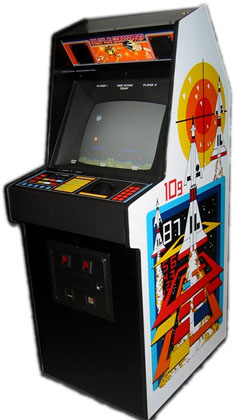
No, I’m not thinking of the play by Shakespeare, or the painting by Giogiorne, though both were quite good. I’m talking about the arcade game by Atari. Fresh off their success of Asteroids, Atari once again called upon the sexy power of vectors to make their next space-shooty game. In light of Asteroids’ marked success and the countless clones it inspired, just what makes this unassuming twitch game so special? I mean, aside from the awesomely angular cabinet? Let’s take a look. (Seriously, look at that thing. Atari was not messing around when they chiseled those edges and corners!)
Continue reading

Missile Command

Original version: Missile Command, released in 1980 for arcade

If you were alive during the cold war you must remember the fear and uncertainty that came with wondering how long the arms race between the US and USSR would last. Missile Command was inspired by this very fear and puts you, the player, in charge of millions of lives.

Continue reading

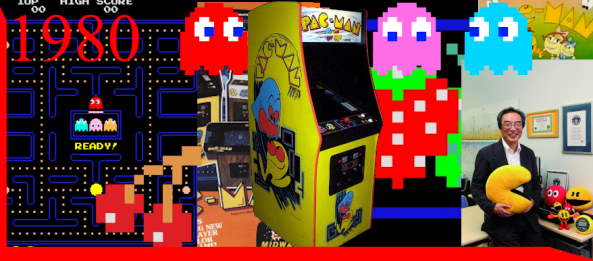
Pac-Man

Original version: Pac-Man, released in 1980 for arcade


Waka waka waka waka waka waka waka waka. I guarantee that the sound effect of Pac-Man eating pellets is etched in your brain (unless you’re a Shakira fan and you hear the song “Waka Waka,” but the less spoken about that, the better).

Continue reading

Runners-up of 1979


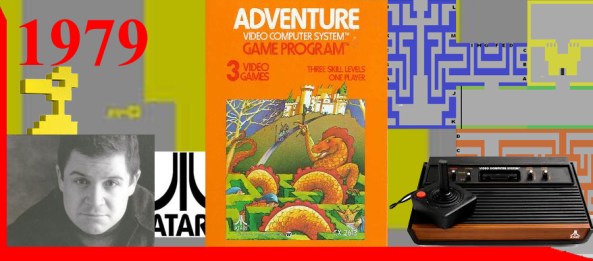
Adventure

Original version: Adventure, released in 1979 for the Atari VCS

Before there was Zelda, before there was Ultima, there was Adventure, the premier adventure game for the Atari 2600, then known as the Atari Video Computer System. Released in 1979, it was a first-party title developed by Warren Robinett (more on that later) and was inspired by Colossal Cave Adventure, the seminal text adventure released three years earlier.

Continue reading

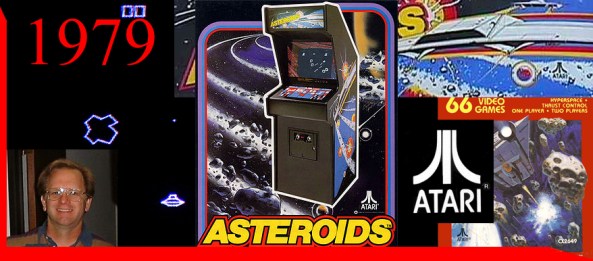
Asteroids

Original version: Asteroids, released in 1979 for arcade

In art, throughout the ages, there has been a push towards representing the subject with as much realism as possible. We can see a drastic difference between a work by Cimabue and one by the later Gaddi, who had the benefit of living a century later and thus could start out with knowledge Cimabue and his colleagues had to discover during their careers. Only after the advent of cameras and the quick, realistic “paintings” they could produce did artists adopt a widespread genuine interest in the stylized and abstract. These artists, possibly feeling threatened by the cheaper, quicker photography, founded a movement called Impressionism, in which the likes of Monet and Picasso flourished.

Continue reading

Runners-up of 1977

Welcome to the category “Runners-up.” In this feature I write about the games of a given year that were important/influential/noteworthy/pretty darn good, but not excellent enough to be timeless classics. This enables me to write about the games that shaped the medium without giving them a dedicated games appreciation article–that wouldn’t be fair to the other games, and it may confuse readers into playing a substandard game. For this year I only have one runner-up.

Continue reading

PONG

Original Version: PONG, released in 1972/08 for arcade

It wasn’t the first game ever made, but it has arguably been the most influential. Meet Pong, the first game of the Atari company. Founded by Ampex engineers Nolan Bushnell and Ted Dabney in 1972, Atari’s name was taken from a move in the game of Go (the loose equivalent of “atari” would be “check” in chess). Bushnell’s and Dabney’s previous game, Computer Space, was a commercial failure, being too difficult and dense for the average gamer to enjoy. Bushnell though that the next big hit would be something just as complex. What happened was the opposite.

Continue reading

Why Appreciate Games?

Whys are more important than hows.

by John “Who else?” Everett

Hello, there. In my article on Oregon Trail, I briefly explained the reasons for doing this series. Now I would like to add more detail. If you are not a gamer and you’re skeptical about the virtues of this medium, I hope that this will convince you to appreciate games. Even if you are a gamer, I think you’ll still have something to gain from this.

Continue reading