Guide to Emulation

Here’s a guide I wrote three years ago when I should have been writing essays for my classes. Classes that I eventually failed….. Anyway, I sure did put a lot of work into this!
I know this has some inaccuracies in the technical details. If you know the correct details, please point them out so I can correct this.
To skip to the next article, click here.

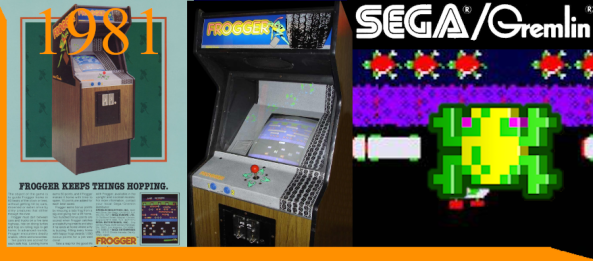
Frogger

Original version: Frogger, released in 1981 for arcade

It’s not easy being green. Or yellow, for that matter. Frogger centers around the titular tree frog who needs to get to his home on the other side of the river. Seemingly the only part of Frogger anyone remembers is the first half of the screen with the cars, even though the river is the main course.
Continue reading

A Gaming Decade in Review: 1970s

Wow, is it already the end of the decade? It seems like such a short time that I have been covering the games of the 1970s, although a contributing factor may have been me covering only a few games from the whole decade. Well, at any rate we can take a look back now and see what has led us to this point. As we welcome the 1980s let’s appreciate the triumphs and (it is hoped) learn from the failures that came to pass.

Continue reading

Centipede

Original version: Centipede, released in 1980 for arcade
Refinement has always been as central an aspect to video gaming as innovation. As soon as a brilliant idea comes to the medium, it is edited and polished at such a dizzying pace that cinema seems downright sluggish. Devil May Cry (2001) introduced a semi-fixed camera that was refined by God of War (2005). Stardust (1993) used pre-rendered 3D sprite graphics that were refined by Donkey Kong Country (1994) and perfected by Vectorman (1995). Back in 1980, Dona Bailey was inspired by Space Invaders which created the “shoot ’em up” genre in 1978. Let’s look at her addition to the genre after the jump.

Tempest and Tempest 2000

Original version for game 1: Tempest, released in 1980 for arcade
Original version for game 2: Tempest 2000, released in 1994 for Atari Jaguar

No, I’m not thinking of the play by Shakespeare, or the painting by Giogiorne, though both were quite good. I’m talking about the arcade game by Atari. Fresh off their success of Asteroids, Atari once again called upon the sexy power of vectors to make their next space-shooty game. In light of Asteroids’ marked success and the countless clones it inspired, just what makes this unassuming twitch game so special? I mean, aside from the awesomely angular cabinet? Let’s take a look. (Seriously, look at that thing. Atari was not messing around when they chiseled those edges and corners!)

Continue reading

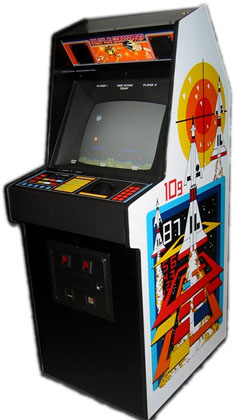
Missile Command

Original version: Missile Command, released in 1980 for arcade

If you were alive during the cold war you must remember the fear and uncertainty that came with wondering how long the arms race between the US and USSR would last. Missile Command was inspired by this very fear and puts you, the player, in charge of millions of lives.

Continue reading

Runners-up of 1979


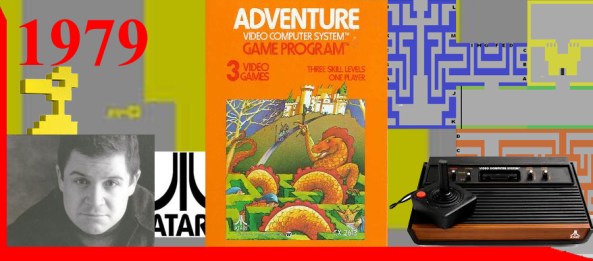
Adventure

Original version: Adventure, released in 1979 for the Atari VCS

Before there was Zelda, before there was Ultima, there was Adventure, the premier adventure game for the Atari 2600, then known as the Atari Video Computer System. Released in 1979, it was a first-party title developed by Warren Robinett (more on that later) and was inspired by Colossal Cave Adventure, the seminal text adventure released three years earlier.

Continue reading

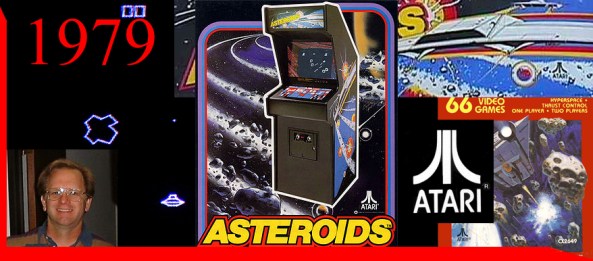
Asteroids

Original version: Asteroids, released in 1979 for arcade

In art, throughout the ages, there has been a push towards representing the subject with as much realism as possible. We can see a drastic difference between a work by Cimabue and one by the later Gaddi, who had the benefit of living a century later and thus could start out with knowledge Cimabue and his colleagues had to discover during their careers. Only after the advent of cameras and the quick, realistic “paintings” they could produce did artists adopt a widespread genuine interest in the stylized and abstract. These artists, possibly feeling threatened by the cheaper, quicker photography, founded a movement called Impressionism, in which the likes of Monet and Picasso flourished.

Continue reading