Category Games Appreciation
Runners-Up of 1981
For this year we’ll do a brief overview of the Vectrex console, and take a look at an interesting first entry of a long-running CRPG series.
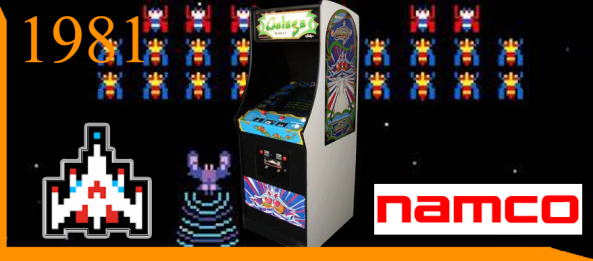
Galaga (HONORABLE MENTION)
Original version: Galaga, released in 1981 for arcade
Welcome to my new category “HONORABLE MENTION,” which is reserved for games that just barely fall short of being timeless classics. Perhaps a game has a technical or gameplay flaw that holds it back, or perhaps a game’s core gameplay is completely eclipsed by a later game. Nevertheless, a game with the title of “HONORABLE MENTION” is still good and is deserving of an article; and if you were to play it you would probably have a great time. In the interest of fairness, only one game per year can receive this title.
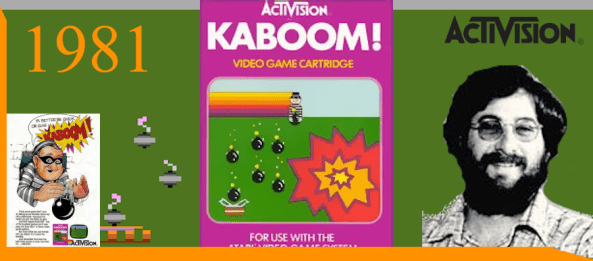
Kaboom!
Original version: Kaboom!, released in 1981 for Atari VCS
I discussed in my review of the 1970s that Activision was the first third-party developer in video gaming. They took advantage of their new-found license to make games by producing a slew of titles for the Atari VCS, some of which were even good. OK, that’s a little harsh. Compared to the standard fair Activision’s games were better than average–well, most of them. Some games were still shovelware.
Guide to Emulation
Here’s a guide I wrote three years ago when I should have been writing essays for my classes. Classes that I eventually failed….. Anyway, I sure did put a lot of work into this!
I know this has some inaccuracies in the technical details. If you know the correct details, please point them out so I can correct this.
To skip to the next article, click here.
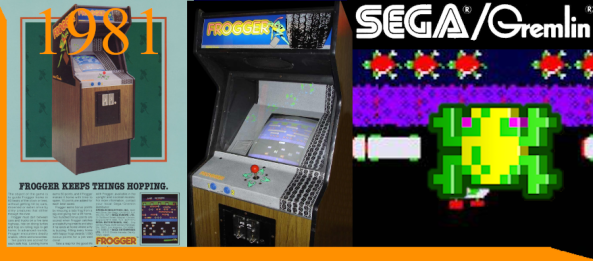
Frogger
Original version: Frogger, released in 1981 for arcade
It’s not easy being green. Or yellow, for that matter. Frogger centers around the titular tree frog who needs to get to his home on the other side of the river. Seemingly the only part of Frogger anyone remembers is the first half of the screen with the cars, even though the river is the main course.
Continue reading
Donkey Kong

“Invitation to Reclusion at Jingxi,” 1611
Original version: Donkey Kong, released in 1981 for arcade
Runners-up of 1980
The last year of the decade saw a wide variety of influential and noteworthy games. These are their stories.
A Gaming Decade in Review: 1970s
Wow, is it already the end of the decade? It seems like such a short time that I have been covering the games of the 1970s, although a contributing factor may have been me covering only a few games from the whole decade. Well, at any rate we can take a look back now and see what has led us to this point. As we welcome the 1980s let’s appreciate the triumphs and (it is hoped) learn from the failures that came to pass.
Centipede

Original version: Centipede, released in 1980 for arcade
Refinement has always been as central an aspect to video gaming as innovation. As soon as a brilliant idea comes to the medium, it is edited and polished at such a dizzying pace that cinema seems downright sluggish. Devil May Cry (2001) introduced a semi-fixed camera that was refined by God of War (2005). Stardust (1993) used pre-rendered 3D sprite graphics that were refined by Donkey Kong Country (1994) and perfected by Vectorman (1995). Back in 1980, Dona Bailey was inspired by Space Invaders which created the “shoot ’em up” genre in 1978. Let’s look at her addition to the genre after the jump.
 Cake's Corner