Amazon.co.jpで買えます。
English version is on page 2.
The English version is on Page 2.
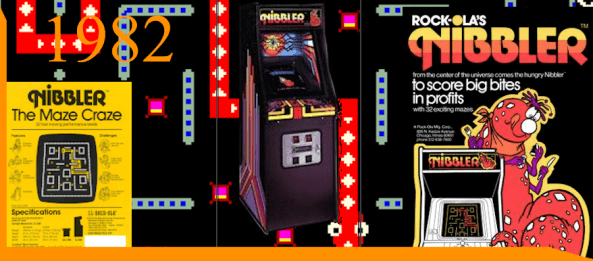
Original version: Nibbler, released in 1982 for arcade
In my Ms. Pac-Man feature I remarked that the 1981 game Lady Bug demonstrated that the “maze chase” genre allows for many different interpretations, and now I’m here to show you that it can be taken in an entirely different direction with Nibbler, a game that makes traveling through the maze steadily more and more restrictive by filling it with a snake. Intrigued? I thought so.

Pictured: an unrelated Nibbler.
“Asking a liberal where prices and wages come from is like asking a six-year old where babies come from.” -Thomas Sowell
It’s all come to this, the final showdown. The third and final part of my debate with Mr. S begins on page 2 after a brief aside. This third part contains a lot of graphs and charts that present data in an easy-to-digest form, but also has enormous walls of text. Wait, that’s how I’m going to start this? Let me try this again: Inside you’ll find many of my arguments presented with pictures to visually represent vast amounts of data, making it easier to see and understand. (There, that’s much more fun!)
“There is only one difference between a bad economist and a good one: the bad economist confines himself to the visible effect; the good economist takes into account both the effect that can be seen and those effects that must be foreseen.”
-Frédéric Bastiat
When dealing with the economic effects of a policy it is paramount that we are able to see the unseen. In my debate with Mr. S last week several studies on minimum wage effects were referred to but not sufficiently analyzed (my bad). Especially in regards to the Krueger & Card study, it is important to realize that economists with an agenda will make the info say what they want the info to say. For example: the gender gap!
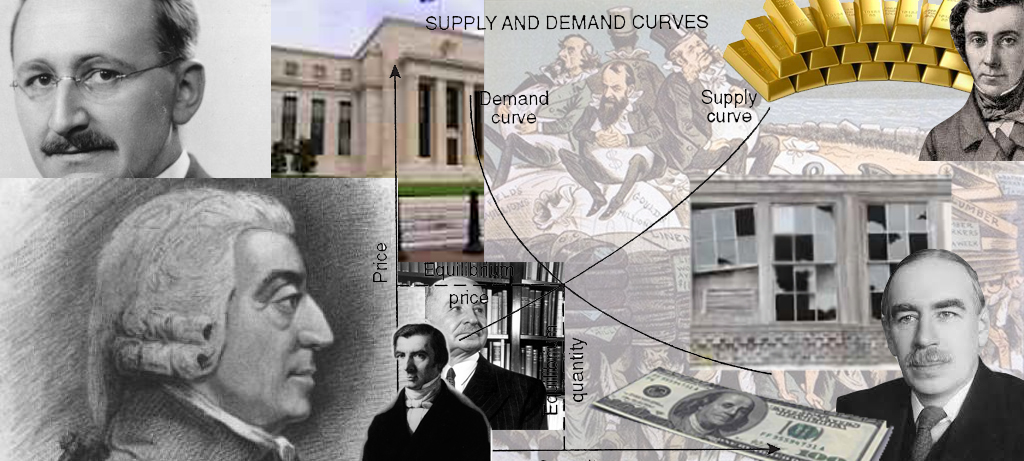
“The most difficult subjects can be explained to the most slow-witted man if he has not formed any idea of them already; but the simplest thing cannot be made clear to the most intelligent man if he is firmly persuaded that he knows already, without a shadow of doubt, what is laid before him.” Leo Tolstoy
In case you haven’t heard, lately there’s been a lot of debate concerning the minimum wage. Opinions are varied but among those who are most outspoken on the matter, most want the wage to be raised to $11 per hour. Every side brings up important points, but what most human beings forget to do when debating is to let the facts dictate opinion instead of the other way around. This may bother you, and if it does I hope very much to convince you, but I believe that the minimum wage ought to be abolished. As in, a $0 minimum wage. And about 50% of economists agree on that point. If you don’t, but you’re open-minded and willing to learn, read on.

It’s time for another writing challenge! (Here’s the first in case you missed it.) This time around, writers were asked to submit a sentence containing synesthetic elements. Synesthesia is a condition in which a person perceives stimuli as if they belonged to a different sense (e.g. seeing musical colors or tasting sounds). Mixing perceptions like this can add layers of meaning or feeling to what you’re writing; we were asked to demonstrate thus. Here’s mine:

This image is a joke. Just keep reading.
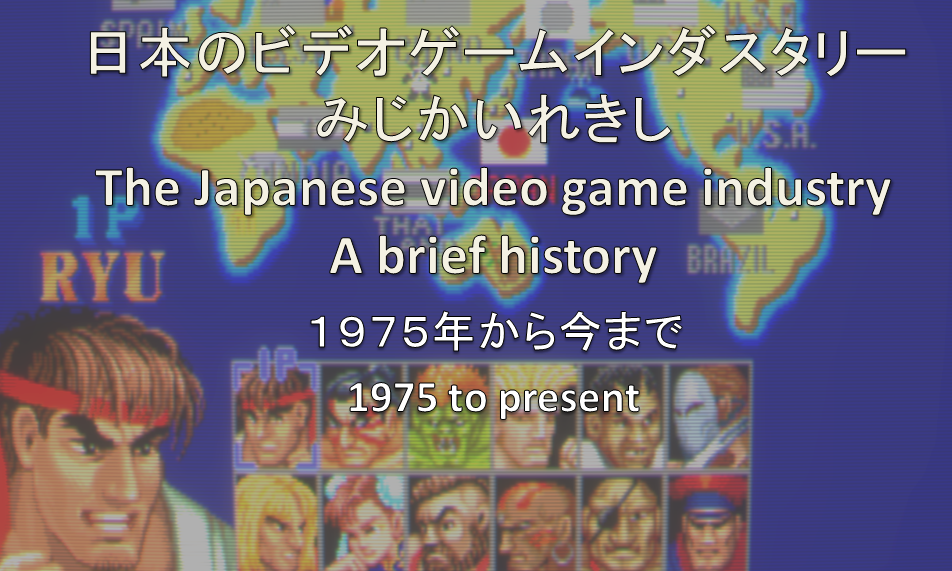 This is my semester project for Japanese 301. The first video is the finished product in Japanese, the second video contains an English dub, and the third is my rough draft, complete with grammar errors. Enjoy!

In the 1920s, as the apocryphal tale goes, Ernest Hemingway was challenged to write a story only six words long. He turned out the above story and considered it his best work. In so doing, he revived interest in the genre of flash fiction. Last week an old friend challenged me and others to write our own six-word stories. Let’s take a look at my entry and a few of my favorites after the jump.

 Cake's Corner