Metroid: Zero Mission

Original version: メトロイド, released on 1986/08/06 for Nintendo Famicom Disk System

Recommended version: メトロイド ゼロミッション, released on 2004/05/27 for Game Boy Advance

After the platforming goodness of Super Mario Bros. and the open world exploration of Legend of Zelda, Nintendo mixed the two together to create another one of the most influential games of all time.

Continue reading

By tehcakeisapie Posted in Home

The Legend of Zelda

Original version: The Legend of Zelda, released on 1986/02/21 for Famicom Disk System

Recommended version: Classic NES Series: The Legend of Zelda for the Game Boy Advance, released on 2004/02/14.

Every legend has a beginning. Some are more humble than others, but what almost all of them have in common is starting with a very rough first draft. The Legend of Zelda, on the other hand, seemed to hatch fully grown. Of course, it was still a first draft in that it established rules and conventions that later entries built upon, but a surprising amount of its structure began here. It seems to have everything: an open world that emphasizes exploration and secret-finding, items such as the ocarina and boomerang, the main cast of characters, and the instantly recognizable theme music that we couldn’t imagine going along with any other game. Let’s take a look at what made this first entry in the long-running series so legendary.

Continue reading

Japanese Folklore and Mythology in Video Games

Japanese media are often dismissed by westerners as simply being crazy, but this is often the case because of cultural references or allusions that non-Japanese persons simply cannot understand right off the bat. Even an outlandishly off-the-wall video game will appear more sensible once the player examines the origin of certain elements in the game–and that is exactly what I’m about to do. I’ll show you several instances of mythology and folklore in Japanese video games. These instances shall be put in three categories: First, a concept or figure from folklore or mythology that is mentioned by name but does not actually appear; Second, a figure or concept that appears but is not specifically identified as that figure or concept, and may be based off that figure rather than being the figure itself; and Third, an appearance of the figure or location itself, dramatized for use in that video game.

Continue reading

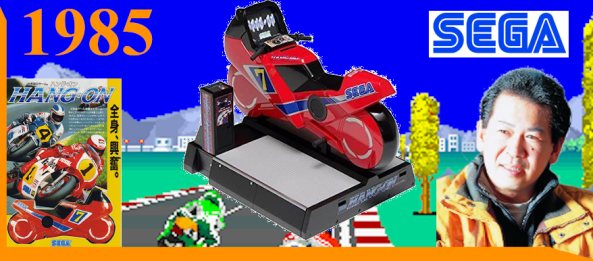
Hang-On (HONORABLE MENTION)

Original version: Hang-On, released in 1985 for arcade

Following in the footsteps of Pole Position, Sega’s racing game Hang-On gave the player a high-speed over-the-shoulder (or more accurately, behind-the-car) racing game with sharp turns and endless AI opponents. Hang-On added something new to the mix, though. The player sat on a motorcycle-shaped seat that they had to tilt to the left or right in order to steer in-game.

Continue reading

The Essential Japan Travel Prep Guide

There is a lot of information that goes into planning a trip, and the further away that destination is (not just in terms of distance, but in terms of culture, foreign language, etc.) the more daunting the task can be. While preparing for a trip to Japan, I have been discovering that there are many pieces of helpful information that I never even thought to ask about. But now that I’ve learned a wealth of knowledge about preparing for a trip, I want to compile it here for any fellow first-time travelers (and for my own reference). I’m going to sort it chronologically so that you won’t be overwhelmed with all the things that need to be done. On the contrary, if you take it one step at a time, then it will be very easily manageable. And of course, the earlier you start the better. So without further ado, here we go.

Continue reading